Why good intentions often fail
Most improvement attempts end up in failure. Without clear ownership, behaviour change, and a review rhythm, new systems quietly revert to old habits.
How We Work
We don't hand over deliverables and leave. We build capability, transfer ownership, and improve continuously.
Most improvement attempts end up in failure. Without clear ownership, behaviour change, and a review rhythm, new systems quietly revert to old habits.
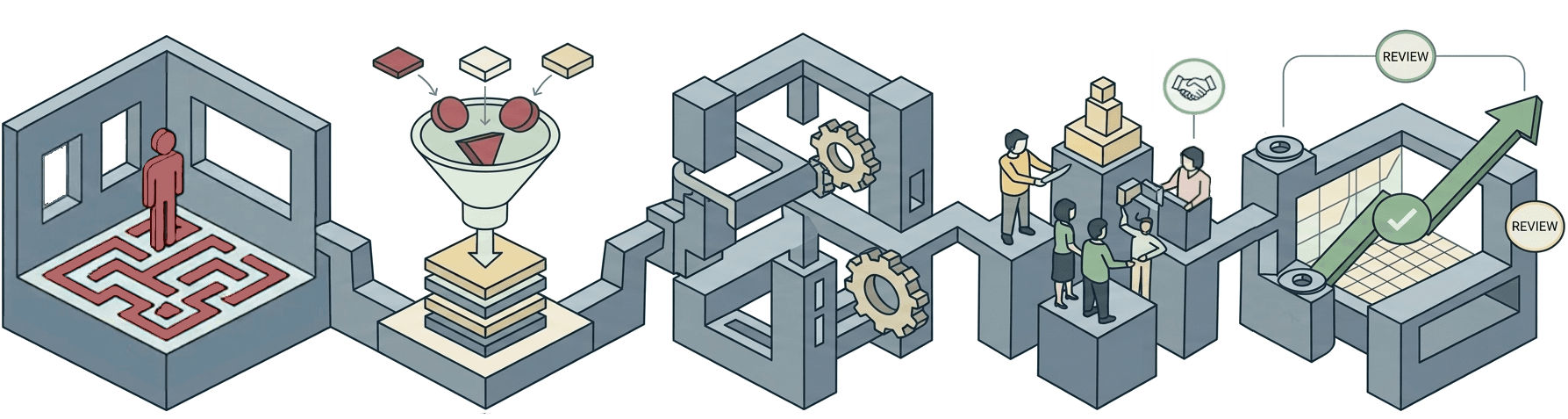
Five stages. Each one builds on the last. Nothing is handed over and forgotten.
From first diagnosis to steady-state improvement.
01
Map friction, wasted motion, and operational blockers.
02
Pick the highest-impact changes. Sequence them to minimise disruption.
03
Build into existing workflows, not beside them.
04
Transfer ownership. Teams know exactly when and how to run the system.
05
Run a monthly rhythm of review, fixes, and measured iteration.
We map friction points, quantify their impact, and rank fixes by what matters most to output. No guesswork.
Teams need to own what gets built. Training transfers the why, not just the what.
Monthly review. Inspect the indicators, address what slipped, track what improved. Repeat.
Not every company starts in the same place.
You may begin with:
The goal is always the same
Put robust systems in production and manage them over time.