As boas intenções muitas vezes falham
A maioria das tentativas de melhoria acaba por falhar. Sem responsabilidade clara, mudança de comportamento e revisão periódica, os novos sistemas regressam silenciosamente aos hábitos antigos.
Como Trabalhamos
Não nos limitamos a entregar e partir. Capacitamos as equipas, transferimos autonomia e asseguramos melhorias continuamente.
A maioria das tentativas de melhoria acaba por falhar. Sem responsabilidade clara, mudança de comportamento e revisão periódica, os novos sistemas regressam silenciosamente aos hábitos antigos.
Cinco fases. Cada uma construindo sobre a anterior, alavancando o potencial dos resultados. Nada é entregue para ser esquecido.
Do primeiro diagnóstico à estabilização e melhoria contínua.
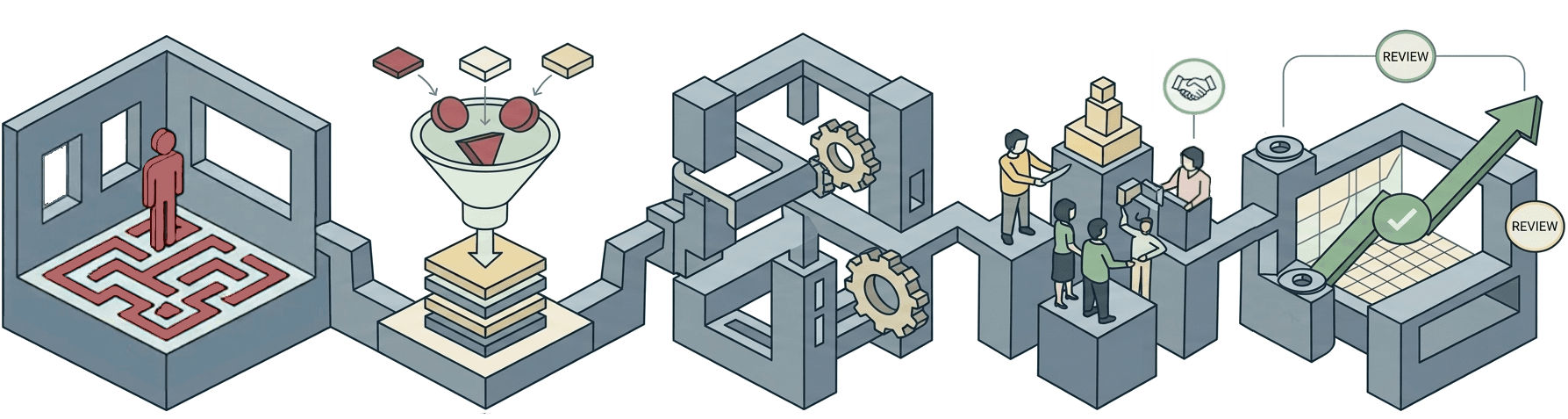
01
Mapear ineficiências, trabalho desperdiçado e bloqueios operacionais.
02
Escolher as mudanças de maior impacto. Faseá-las para minimizar disrupção operacional.
03
Construir nos fluxos existentes, de forma integrada e não independente.
04
Transferir autonomia. As equipas sabem exatamente quando e como executar o sistema.
05
Estabelecer um ritmo mensal de revisão, correções e iteração mensurável.
Mapeamos obstáculos, quantificamos o seu impacto e priorizamos correções pelo que mais importa para os resultados. Sem suposições.
As equipas precisam de adoptar o que é construído. A formação consolida o porquê, não apenas a sua utilização.
Revisão periódica. Analisar os indicadores, corrigir os desvios e consolidar as melhorias. Repetir o processo.
Nem todas as empresas começam no mesmo ponto.
Pode começar com:
O objetivo é sempre o mesmo
Implementar sistemas robustos e assegurar a sua gestão ao longo do tempo.